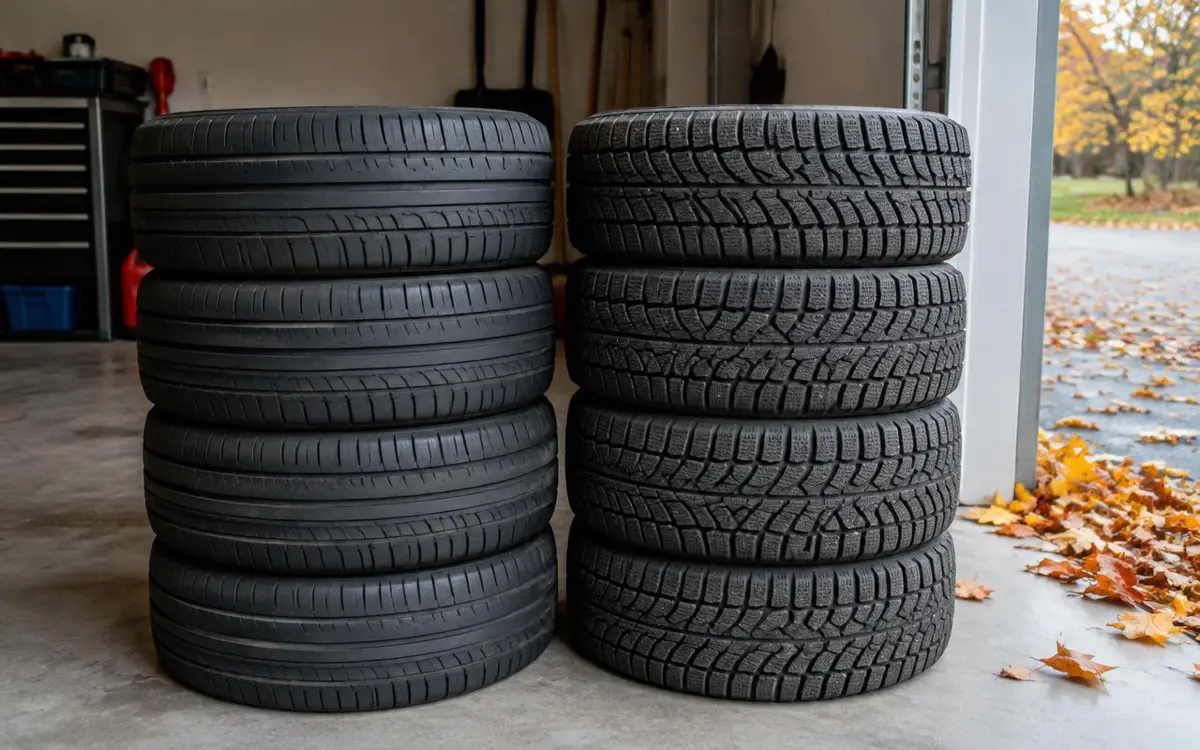
What Seasonal Tire Swapping Involves
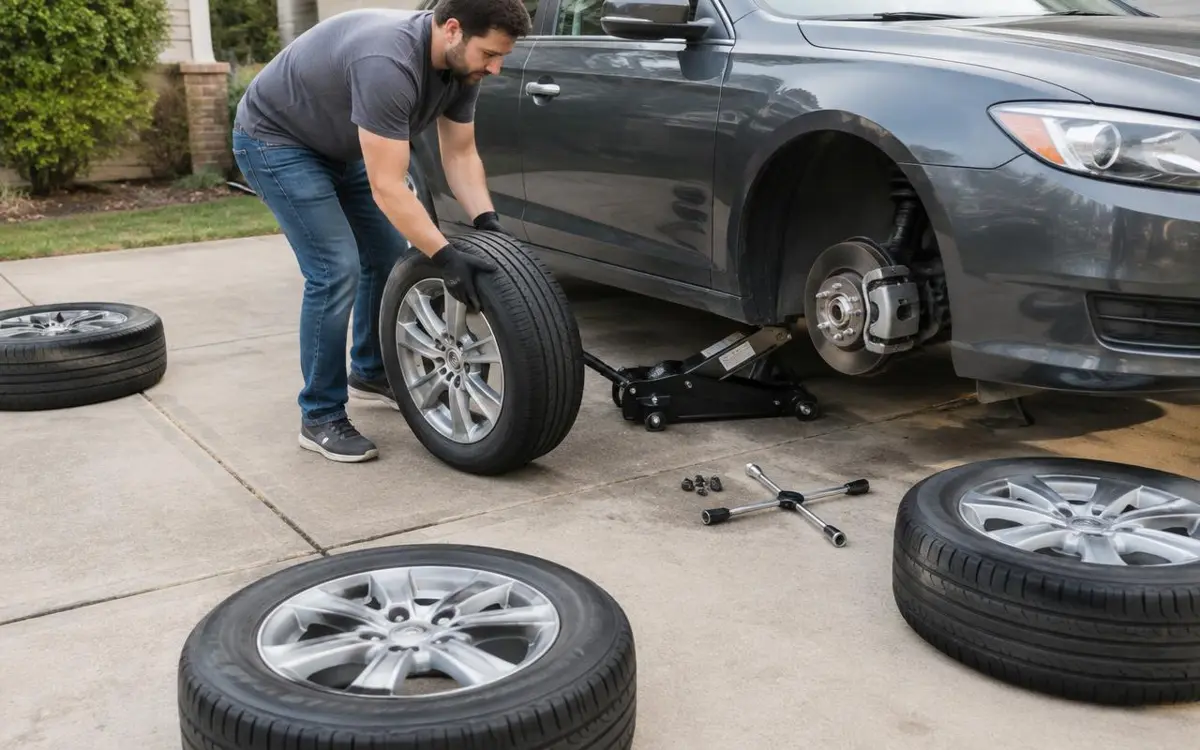
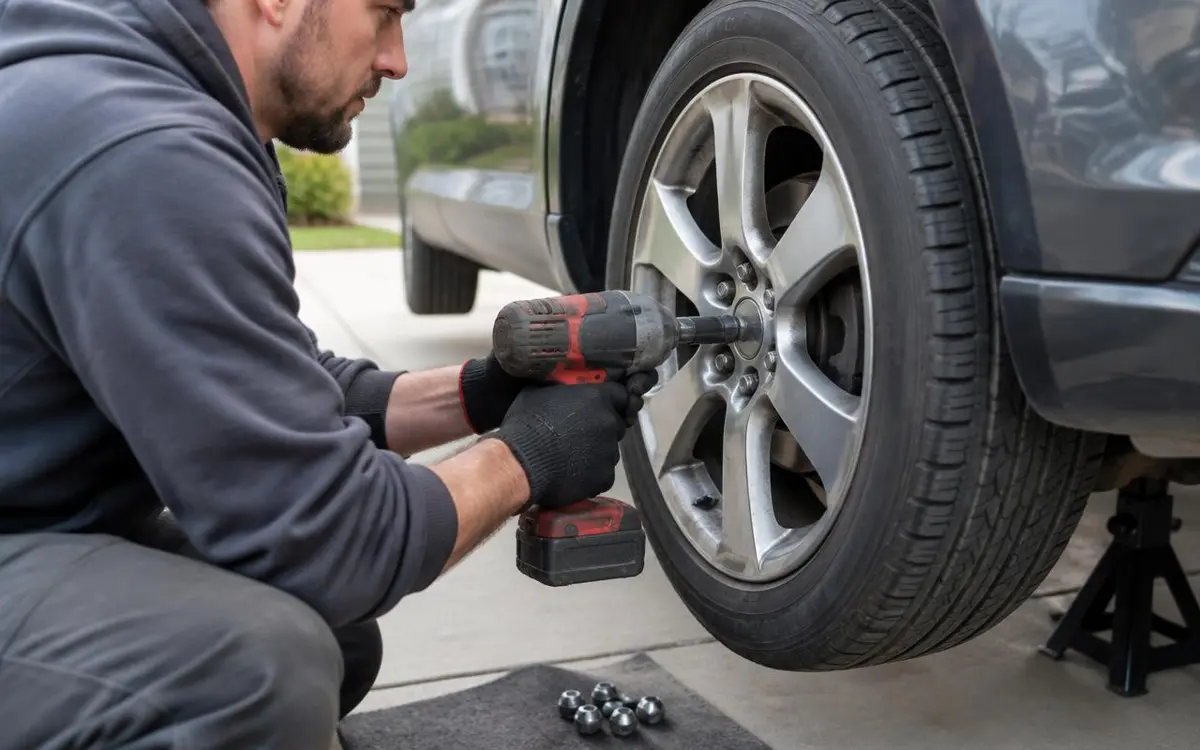
A seasonal swap replaces one set of tires with another suited to the coming months. It may be an on-rim wheel swap or an off-rim change, depending on whether you own a second set of wheels.
Summer to Winter, Winter to Summer
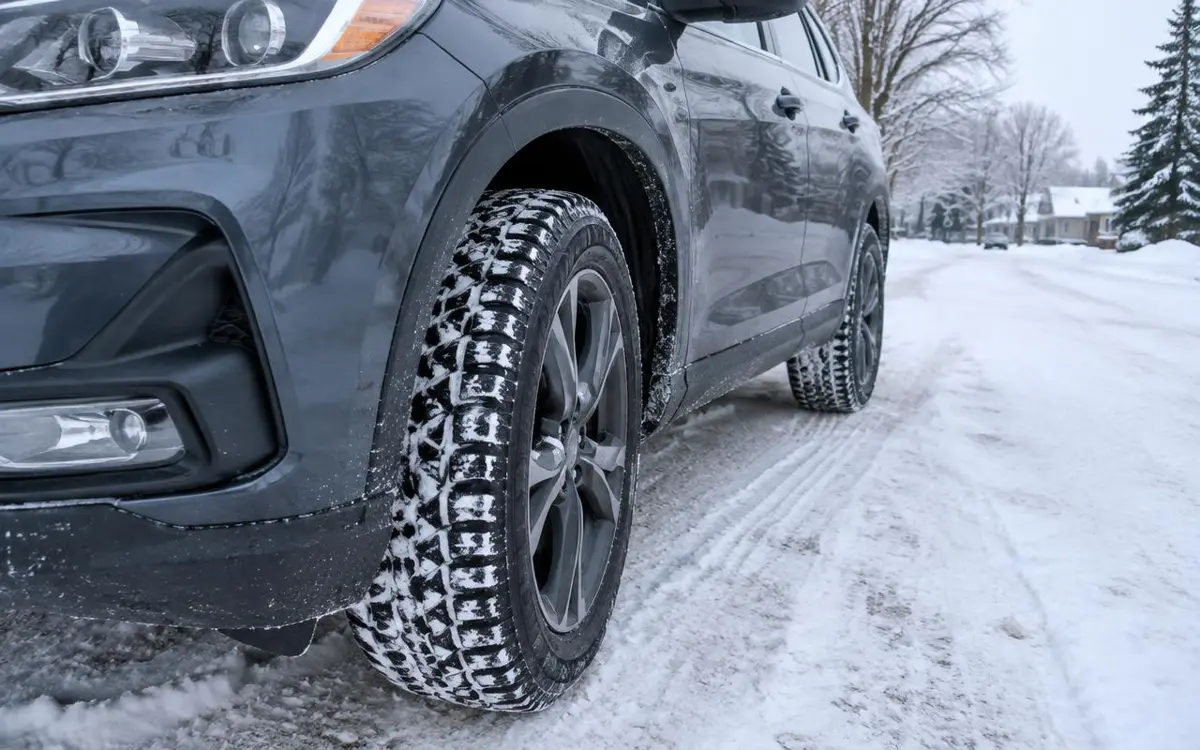
In the fall, winter tires go on for cold-weather grip. In the spring, once temperatures stay above about 7°C, switching back helps reduce wear on soft winter rubber, which wears faster in warm weather.
Seasonal Swap vs. Tire Installation
A seasonal swap uses tires you already own and alternate each season. A tire installation typically means fitting new tires for the first time. If your seasonal set is worn out, you may need both — see our New Tire Installation page.
Seasonal Maintenance Opportunities
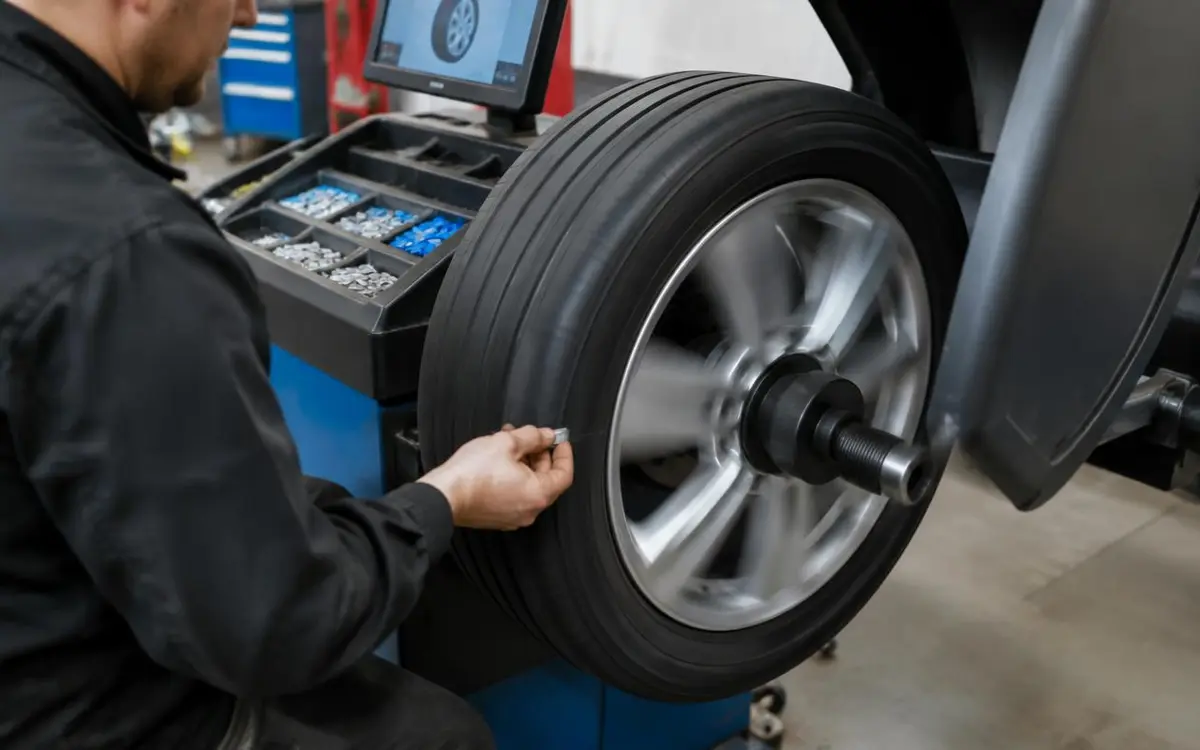
Each swap is a good moment to check tread depth, look for damage and set pressures. Some drivers also ask for tire rotation so that front and rear tires wear more evenly over their life.
Tire Storage Considerations
How you store your off-season tires affects how long they last:
- Clean tires before storage to remove road salt and grime.
- Store in a cool, dry place away from direct sunlight and heat sources.
- Tires on rims can be stacked or hung; tires off rims are best stored upright.
- Mark each tire's position (front-left, rear-right, etc.) to help with rotation.
Appointment Preparation
Have the off-season tires ready near the vehicle, confirm they are the right size for your vehicle, and keep your wheel lock key handy. We will confirm your preferred date when we contact you.
What to Prepare Before Booking
- Your seasonal tire set, cleaned and accessible.
- Whether the tires are on rims.
- Tire size and vehicle details.
- Any position markings from the last swap.
Booking requests are confirmed by our team before the appointment. Have questions first? Contact us.