Common Causes of Punctures
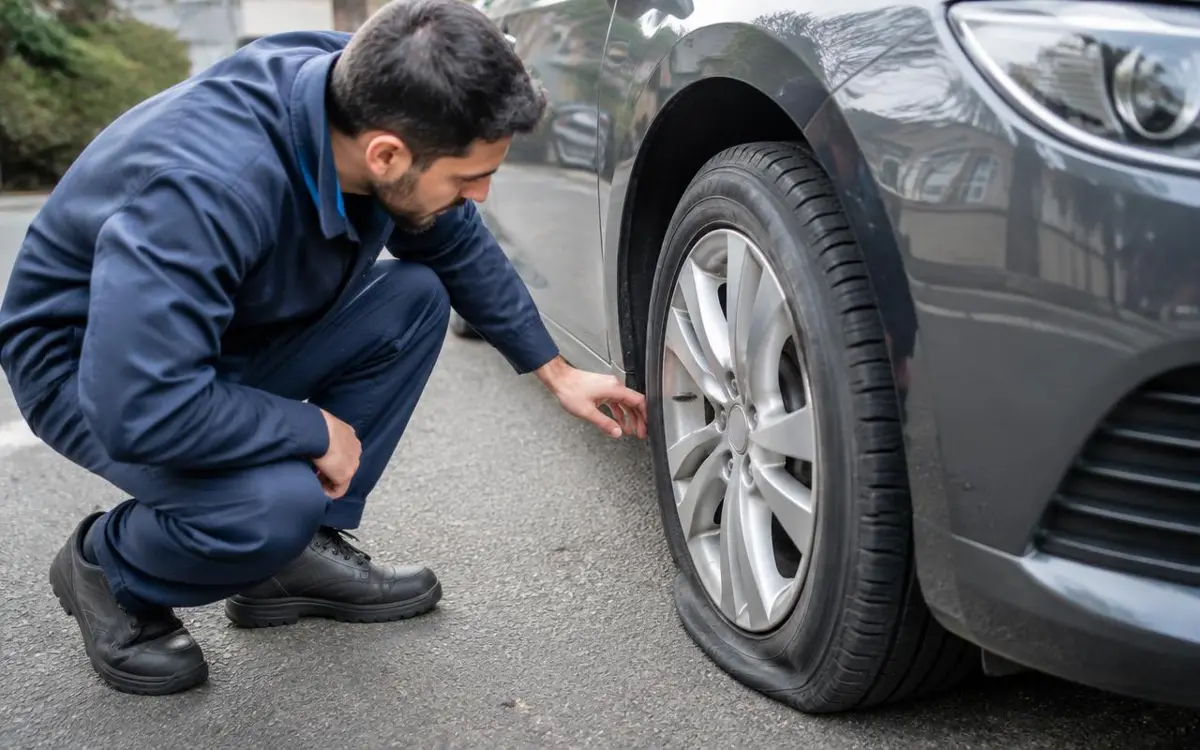
Construction zones, parking lots and road shoulders collect sharp debris. Nails, screws, metal fragments and even glass can work into the tread over time. Punctures often cause a slow leak rather than an immediate flat.
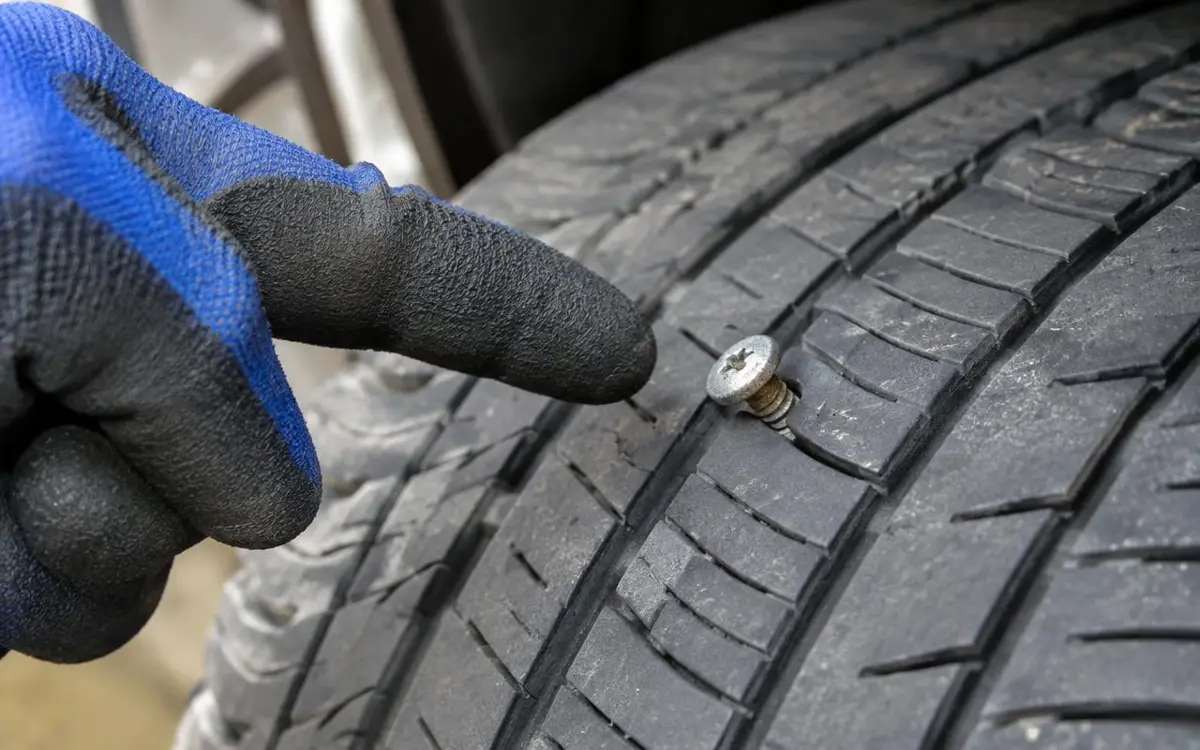
Nail and Screw Punctures
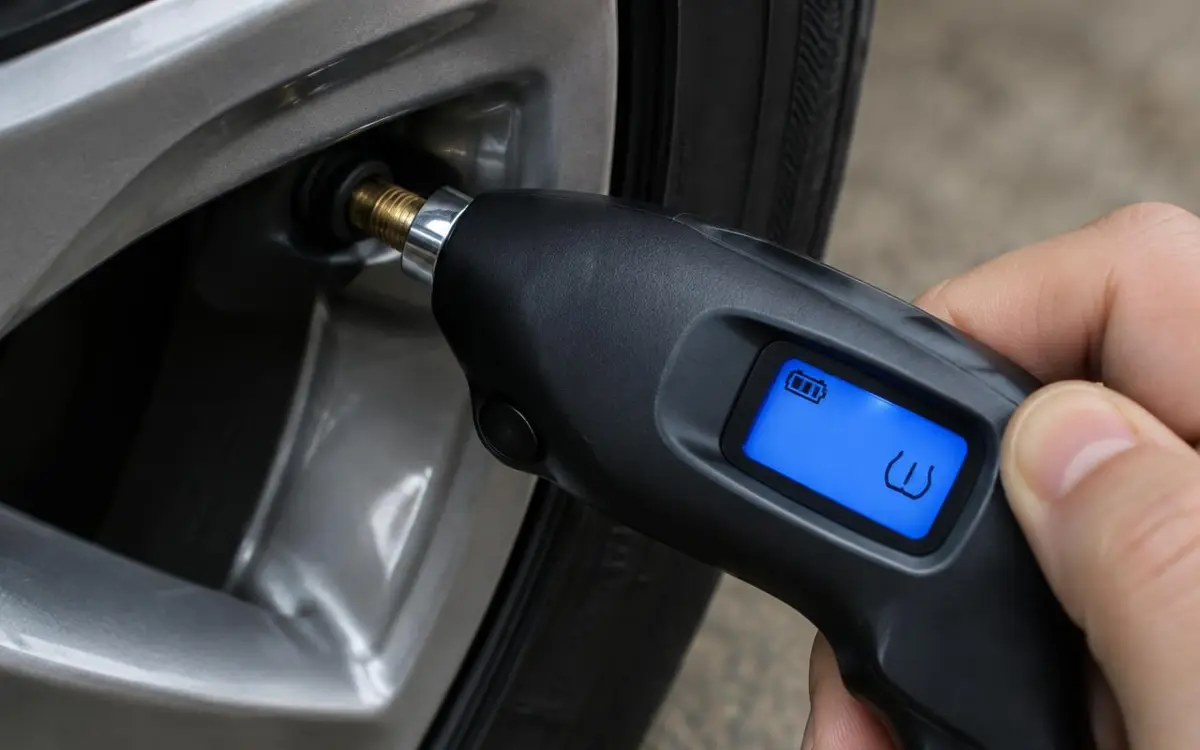
If you find a nail or screw in the tread, resist the urge to pull it out yourself — it may be partly sealing the hole. Check the pressure, avoid long drives and request an inspection as soon as practical.
How the Tire Is Inspected
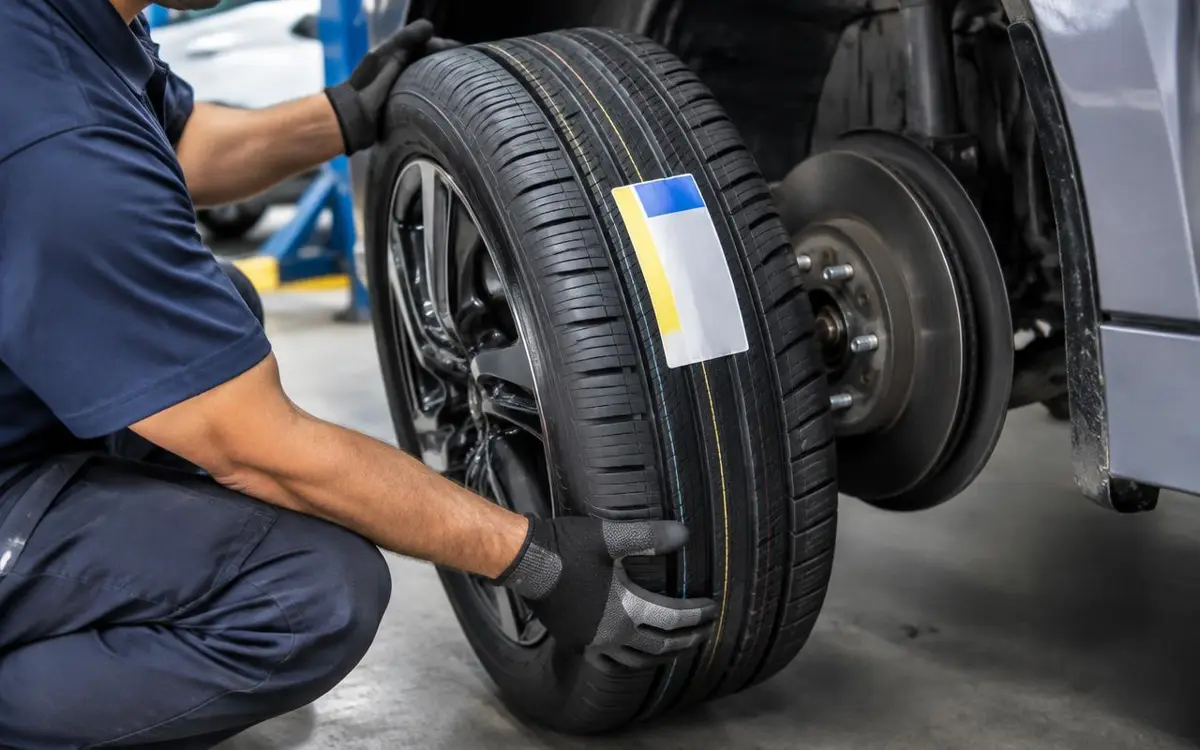
The object's location and angle are checked, the tire is removed from the rim, and the inside is examined for damage. Only after the inside has been inspected can a technician confirm whether a repair is appropriate.
Safe Repair Limitations
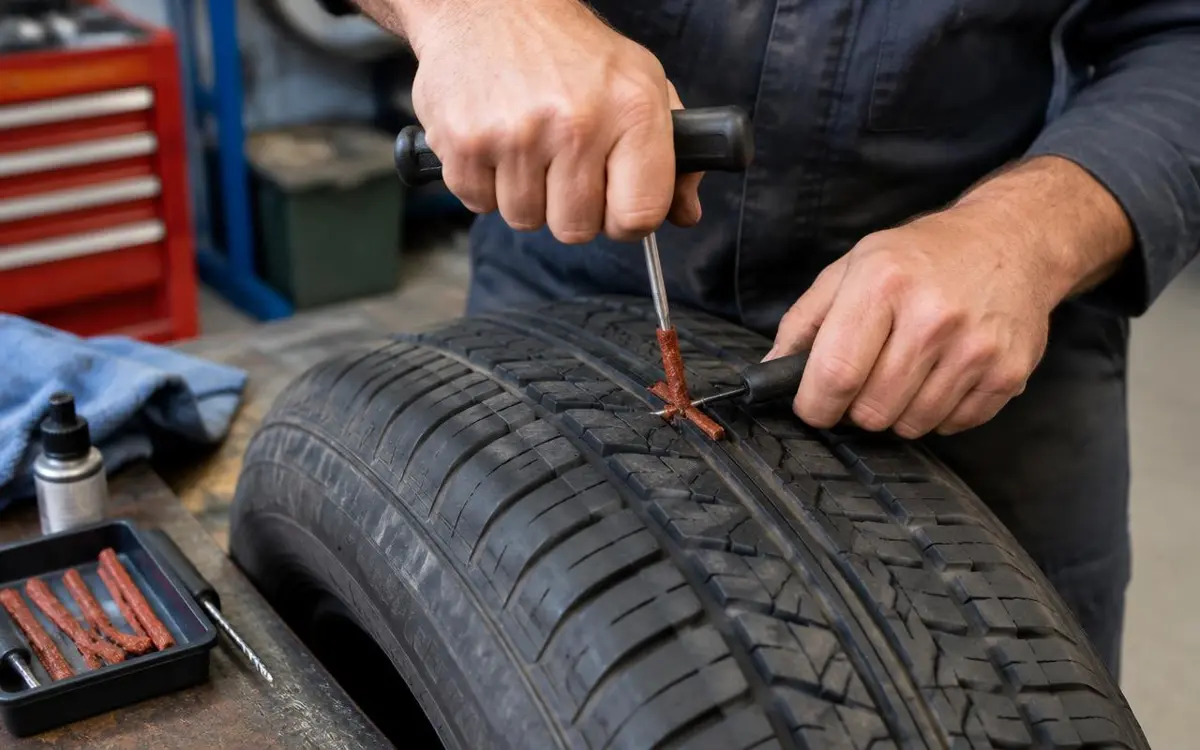
Not every punctured tire can be repaired. Industry practice generally limits repairs to:
- Punctures located in the central tread area, not the shoulder or sidewall.
- Small injuries, typically no larger than about 6 mm (1/4 inch) in diameter.
- Tires with adequate remaining tread and no other serious damage.
- Tires that were not driven a significant distance while flat.
When Repair Is Not Recommended
Punctures in the sidewall or shoulder, angled punctures that travel through the belt, overlapping previous repairs, or any tire with internal damage should be replaced. Some run-flat and performance tires also have manufacturer restrictions on repair. Safety always takes priority over saving a tire.
Why Inspect Early
Catching a puncture early — before the tire runs low — gives you the best chance of a successful repair and avoids being stranded later.
What to Prepare Before Booking
- A photo or description of where the object is in the tire.
- How long the tire has been losing air.
- Tire size and vehicle details.
- Whether the tire has been driven while very low.
Booking requests are confirmed by our team before the appointment. Have questions first? Contact us.