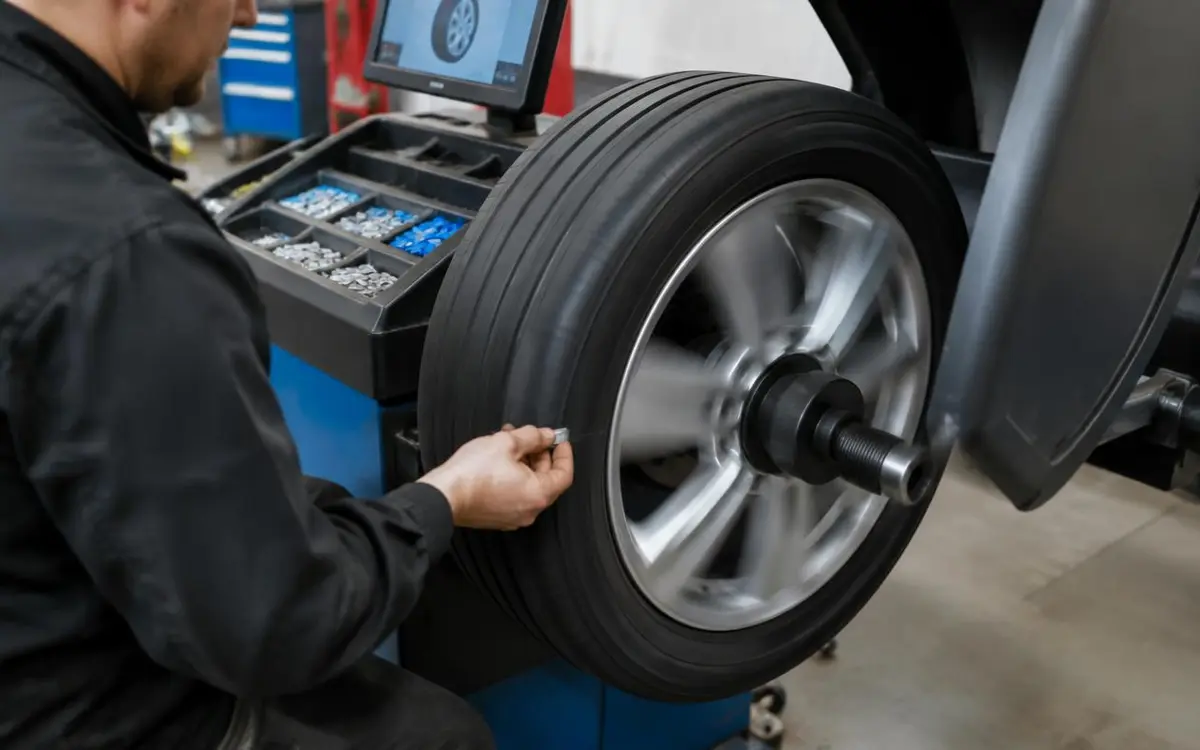
What Wheel Balancing Means
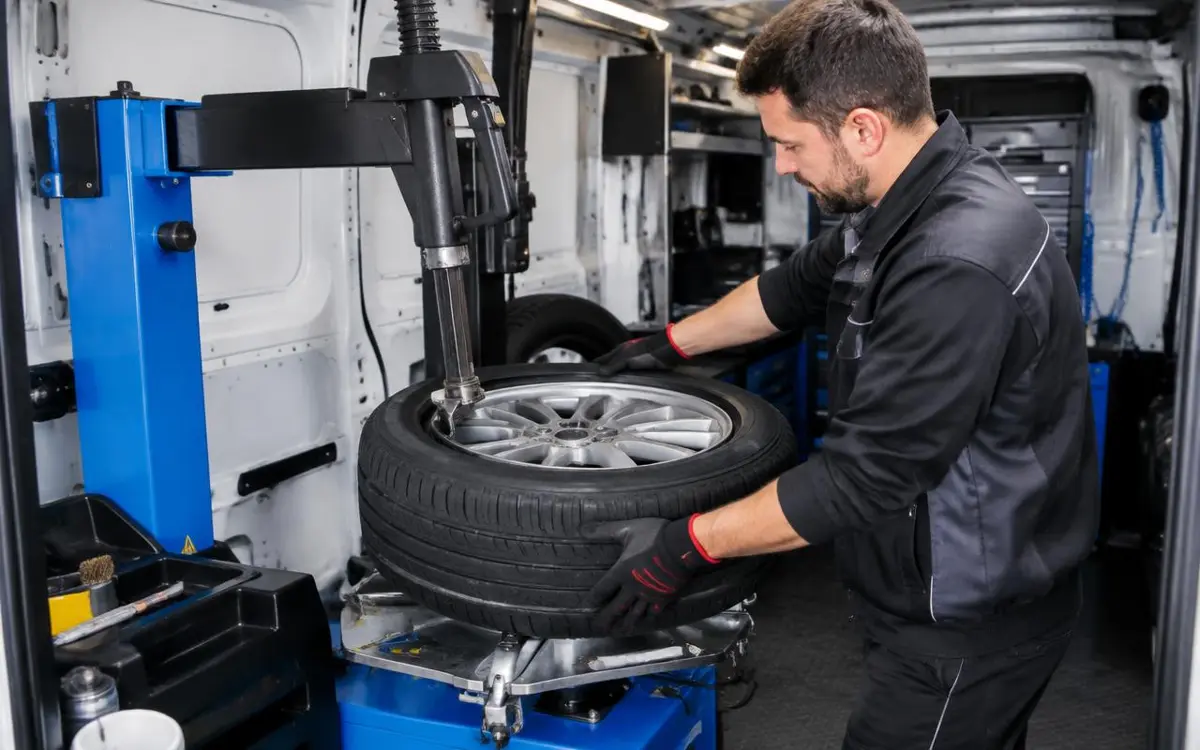
Every tire and wheel has slight variations in weight around its circumference. A balancing machine spins the assembly, measures where it is heavy or light, and indicates where small weights should be added to even it out.
Signs of Unbalanced Wheels
- Vibration in the steering wheel, often at 80–110 km/h.
- Vibration felt through the seat or floor.
- Scalloped or cupped wear patterns on the tread.
- A wheel weight that has fallen off after hitting a pothole.
Steering Wheel Vibration
Vibration through the steering wheel usually points to the front wheels, while vibration through the seat often points to the rear. Vibration can also come from bent rims, worn suspension parts or brake issues, so balancing is not always the only fix.
How Imbalance Affects Tire Wear
An unbalanced wheel bounces slightly as it rolls, which can cause uneven tread wear and extra stress on suspension and steering components. Over time this shortens tire life.
When to Balance Your Wheels
Balancing is recommended whenever a tire is mounted on a rim, after a tire repair that involves removing the tire, and whenever you notice new vibration. Some drivers also balance during seasonal swaps.
Benefits of Proper Balancing
Balanced wheels give a smoother, quieter ride, more even tread wear and less strain on your vehicle's components. It is a small service that makes a noticeable difference on the highway.
What to Prepare Before Booking
- When the vibration happens and at what speed.
- Whether tires were recently mounted or repaired.
- Vehicle details and tire size.
Booking requests are confirmed by our team before the appointment. Have questions first? Contact us.